





Skip to content
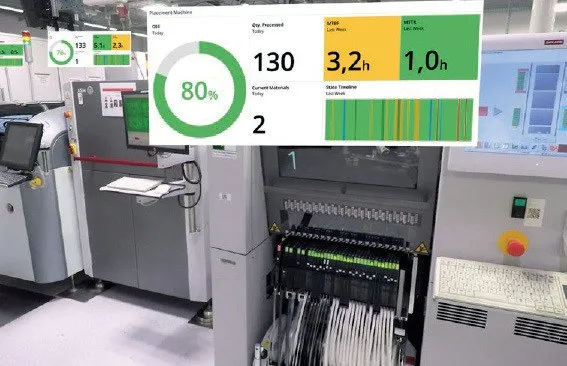
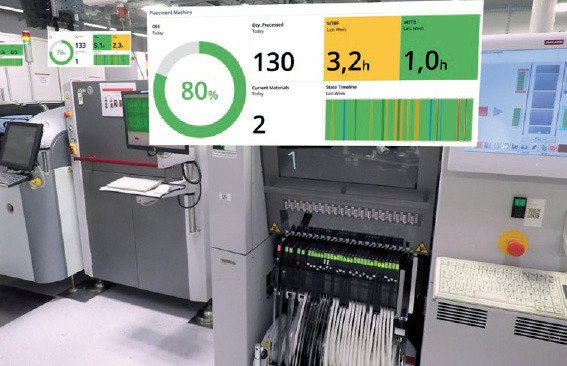
Illustrative MES dashboard and SMT equipment
Critical ManufacturingManufacturing execution software

MES

A manufacturing execution system (MES) tracks production orders and traces the materials used in each electronics assembly. Define equipment, manual-station and enterprise integrations, licensed modules and data capture for the project.
Solution guide

Explore Critical Manufacturing solutions

Critical Manufacturing MES connects material genealogy, production execution and equipment data for electronics assembly. Evaluate it through the traceability and process-control gaps in your factory, then define the required integrations and rollout scope.

01 / 01

Critical Manufacturing MES

Built for Industry 4.0.

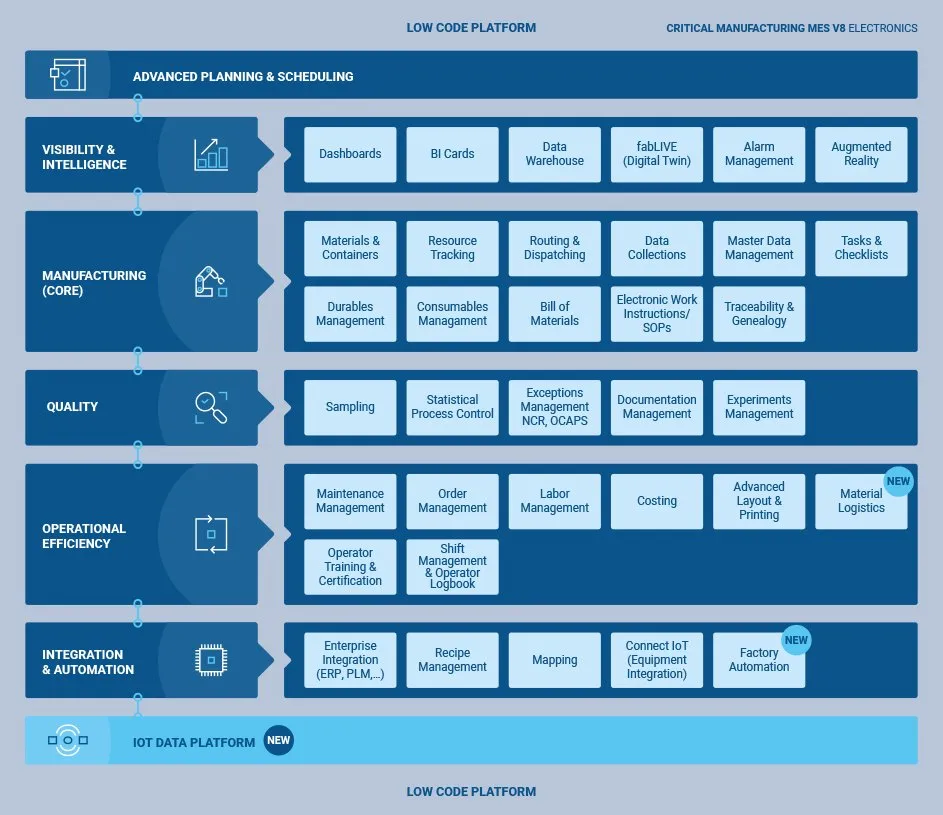
Review connectivity, operator access, deployment, analysis and integration requirements as parts of the MES project. Capabilities depend on release, licensed modules and implementation scope.
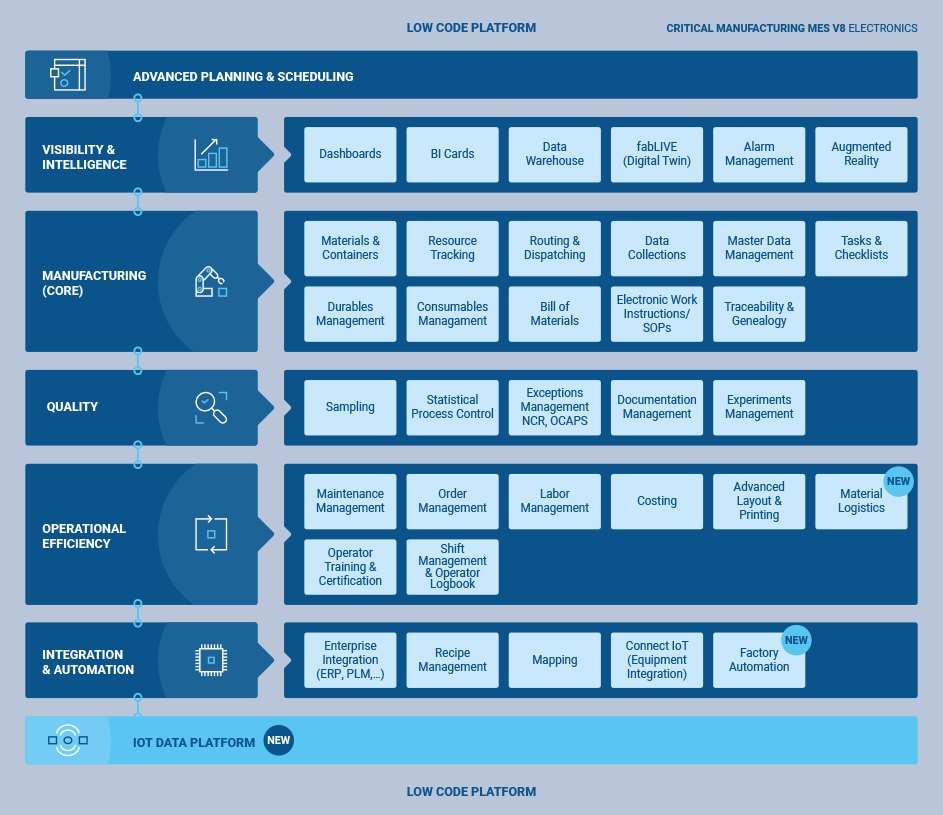
Critical Manufacturing MES
  • 01

    Connectivity

    Connect equipment and capture process/material events through configured interfaces.

  • 02

    Mobile

    Define operator screens, device access and permissions for the workstations in scope.

  • 03

    Cloud

    Agree the hosting model, infrastructure responsibilities and release/update policy before deployment.

  • 04

    Advanced analysis

    Use captured production data for dashboards and analysis; confirm the required data platform and licensed analytics functions.

  • 05

    Decentralization

    Model material routes and process events to build genealogy across the defined production scope.

  • 06

    Vertical integration

    Define equipment and enterprise interfaces, workflow rules and data exchange for the project.

  • 07

    Horizontal integration

    Define the common baseline and each site's integrations and access requirements before a multi-site rollout.

Operational goals to measure

  • Shorter manufacturing cycle time
  • Shorter order lead time
  • Lower direct labor costs
  • Less data entry and paperwork
  • Less work-in-process inventory
  • Higher machine utilization

Business goals to evaluate

  • Higher customer satisfaction
  • Better regulatory compliance
  • Faster agility and time to market
  • Better supply-chain visibility

Applications & selection

An MES records and enforces what happens to material as it moves through the factory. The electronics solution supports lot, panel and board structures, linking components into PCBAs and PCBAs into final assemblies as production takes place.

Where it fits

  • Component-to-board and board-to-final-unit genealogy
  • Controlled rework, material baking, floor-life tracking and packing workflows

What to consider when selecting

  • Define the tracking level: lot, panel, board or individual component UID. Each requires matching identifiers and capture points.
  • Map SMT equipment, manual stations, test data and enterprise interfaces before setting the implementation boundary.
  • Choose the software release, licensed modules and equipment connections around your project. Our team can help you define what the implementation needs to include.

Explore further

Documentation & references

Use the references for each solution to explore further. Talk to our sales team about the configuration, accessories and requirements for your application.

Images illustrate products or families; they do not establish the revision or accessories of quoted equipment.

Common questions

Can genealogy cover manual operations as well as SMT?

The electronics solution describes traceability across automated equipment and manual workstations. The project must define which material and process events each station records.

How are moisture-sensitive materials and rework addressed?

Official electronics tutorials cover floor life, expiration propagation, baking, reprocess limits and rework. These are processes to configure against your rules, rather than one generic setting for every product.

What should a useful MES evaluation demonstrate?

Use a representative assembly to demonstrate incoming-material identification, component genealogy, required route execution and recovery from a defect or rework event. This connects the advertised capabilities to your actual production flow.

Share product information

The right information. Ready to share.

Send this information to your team, or download a QR card with SMarTsol and brand logos for presentations and printed materials.

SMarTsol QR card for Critical Manufacturing — all solutions

Ready to see it running?

Ask about demonstration availability for your selected equipment or request a tailored quote.

SMarTsol Technologies MéxicoCritical Manufacturing

Equipment portfolio

Critical Manufacturing

MES

A manufacturing execution system (MES) tracks production orders and traces the materials used in each electronics assembly. Define equipment, manual-station and enterprise integrations, licensed modules and data capture for the project.

Illustrative MES dashboard and SMT equipment

Critical Manufacturing MES connects material genealogy, production execution and equipment data for electronics assembly. Evaluate it through the traceability and process-control gaps in your factory, then define the required integrations and rollout scope.

Solutions

  1. Critical Manufacturing MES

https://smartsol.mx/en/brands/critical-manufacturing
contact@smartsol.mx

Critical Manufacturing · 01 / 01

Critical Manufacturing MES

Built for Industry 4.0.

Review connectivity, operator access, deployment, analysis and integration requirements as parts of the MES project. Capabilities depend on release, licensed modules and implementation scope.

Product or family illustration; configuration may vary.

Connectivity

Connect equipment and capture process/material events through configured interfaces.

Mobile

Define operator screens, device access and permissions for the workstations in scope.

Cloud

Agree the hosting model, infrastructure responsibilities and release/update policy before deployment.

Advanced analysis

Use captured production data for dashboards and analysis; confirm the required data platform and licensed analytics functions.

Decentralization

Model material routes and process events to build genealogy across the defined production scope.

Vertical integration

Define equipment and enterprise interfaces, workflow rules and data exchange for the project.

Horizontal integration

Define the common baseline and each site's integrations and access requirements before a multi-site rollout.

Operational goals to measure

  • Shorter manufacturing cycle time
  • Shorter order lead time
  • Lower direct labor costs
  • Less data entry and paperwork
  • Less work-in-process inventory
  • Higher machine utilization

Business goals to evaluate

  • Higher customer satisfaction
  • Better regulatory compliance
  • Faster agility and time to market
  • Better supply-chain visibility

Applications & selection

An MES records and enforces what happens to material as it moves through the factory. The electronics solution supports lot, panel and board structures, linking components into PCBAs and PCBAs into final assemblies as production takes place.

Where it fits

  • Component-to-board and board-to-final-unit genealogy
  • Controlled rework, material baking, floor-life tracking and packing workflows

What to consider when selecting

  • Define the tracking level: lot, panel, board or individual component UID. Each requires matching identifiers and capture points.
  • Map SMT equipment, manual stations, test data and enterprise interfaces before setting the implementation boundary.
  • Choose the software release, licensed modules and equipment connections around your project. Our team can help you define what the implementation needs to include.

Common questions

Can genealogy cover manual operations as well as SMT?

The electronics solution describes traceability across automated equipment and manual workstations. The project must define which material and process events each station records.

How are moisture-sensitive materials and rework addressed?

Official electronics tutorials cover floor life, expiration propagation, baking, reprocess limits and rework. These are processes to configure against your rules, rather than one generic setting for every product.

What should a useful MES evaluation demonstrate?

Use a representative assembly to demonstrate incoming-material identification, component genealogy, required route execution and recovery from a defect or rework event. This connects the advertised capabilities to your actual production flow.

Documentation & references

Images illustrate products or families; they do not establish the revision or accessories of quoted equipment. Capabilities and options depend on configuration and process conditions. Confirm requirements with an applications engineer.

  1. MES for electronics manufacturinghttps://www.criticalmanufacturing.com/industries/electronics-manufacturing/
  2. Electronics MES configuration tutorialshttps://help.criticalmanufacturing.com/tutorials/industrytemplates/smt/
  3. Electronics process configuration tutorialshttps://help.criticalmanufacturing.com/tutorials/industrytemplates/smt/